Walnut Creek resident Gail Murray, a former BART board member, is urging voters to approve Measure RTM on the Nov. 3 ballot.
Murray made her case in a letter to the East Bay Times published Friday, Oct. 2, pushing back against former state Sen. Steve Glazer’s argument that BART should cut costs before receiving more funding.
“Shrinking BART for today’s commuters will result in a minimal system unable to attract essential new ridership,” Murray wrote.
Murray was elected to the BART board in November 2004 to represent District 1, which at the time included Walnut Creek, Concord, Pleasant Hill, Lafayette, Orinda, Clayton, Moraga and half of Danville, according to BART records. She also served as Walnut Creek’s mayor and as a city councilmember.
What Measure RTM would do
The measure would add a half-cent sales tax in Contra Costa, Alameda, San Mateo and Santa Clara counties and a one-cent tax in San Francisco for 14 years, according to MTC’s fact sheet. The tax would generate roughly $980 million a year across the region. BART would receive about $310 million annually, the largest share of any agency in MTC’s fiscal year 2028 estimate.
The measure needs a simple majority to pass, according to measure sponsor SPUR. Senate Bill 63, signed by Gov. Gavin Newsom in October 2025, authorized a regional measure. A citizens’ initiative placed it on the ballot.
What happens if it fails
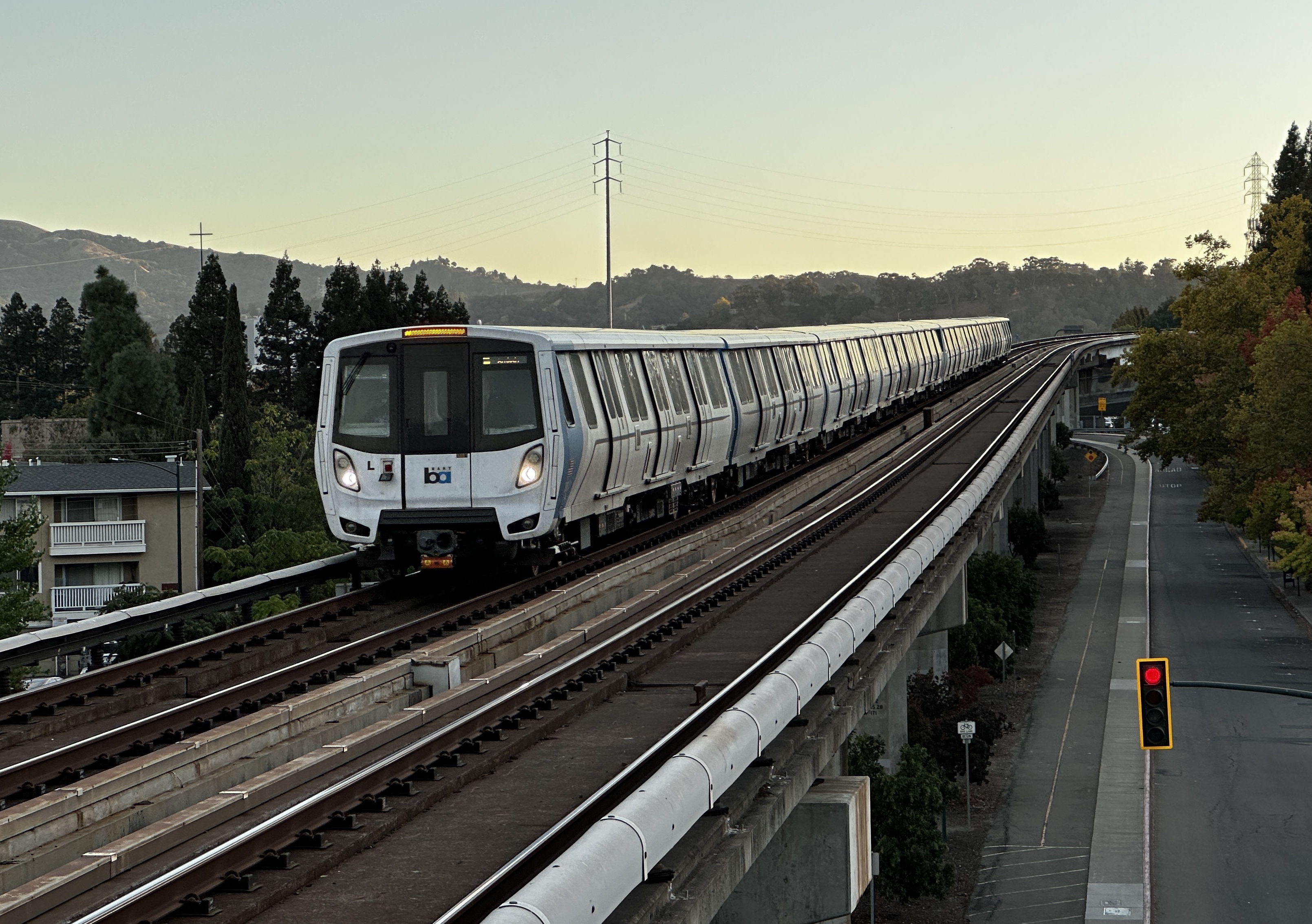
BART’s contingency plan calls for deep cuts starting in January 2027 if the measure fails and no other operating revenue source is identified.
The agency’s board approved an Alternative Service Plan on Feb. 26 that would slash train hours by 63%, end service at 9 p.m. every night instead of midnight, operate three primary lines with limited peak-direction service on the other two and raise fares and parking fees by 30%, according to BART’s financial crisis page.
A second phase in July 2027 could close up to 15 stations and/or close up to 25% of the system’s track miles, if those reductions could be implemented safely. The plan does not identify specific stations for closure.
The agency faces a structural deficit of $350 million to $400 million a year. Before the pandemic, fares and parking fees covered nearly 70% of operating costs, according to BART.
The debate
Murray wrote that cost cuts alone cannot close the gap. Her letter also argued that the measure would protect other regional bus, rail and ferry services.
BART says it has already reduced costs. Its financial crisis page cites an independent review finding $516 million in operating cost savings between fiscal years 2020 and 2025.
Ridership has been climbing. BART averaged 212,060 weekday exits in August 2026, up from 186,515 in August 2025, though still about half the 410,854 recorded in August 2019, according to MTC’s ridership table.
Walnut Creek voters will see Measure RTM on their ballots Nov. 3.