As Breast Cancer Awareness Month draws to a close, Eve Wellness president and co-founder Brendan Foley wants the conversations it inspires to continue. For him, awareness means understanding screening results, asking questions and following through on care throughout the year.
In an Oct. 19 interview with the Walnut Creek Record, Foley discussed the experiences behind Eve and the thinking behind its approach to patients. Following our coverage of the Walnut Creek opening, the conversation offered a closer look at the mission behind the business.
A personal reason to build Eve
Foley recalled helping digitize mammogram films while his father worked on computer-assisted detection technology. That experience introduced him to the work involved in helping physicians identify potential abnormalities.
His father later helped develop the automated breast ultrasound technology and image-analysis software now used at Eve, he explained.
Eve CEO and co-founder Richard Blunck brought another perspective. Foley recounted how Blunck’s wife repeatedly received notifications about dense breast tissue without clearly understanding what to do next.
Those experiences shaped a question: How could they make existing imaging technology easier for patients to access and understand?
“Why aren’t we just making it convenient? Why don’t we just go direct to consumer?” Foley asked.
His background in marketing and retail influenced the answer. Alongside the medical technology, he wanted to build an experience that felt welcoming rather than intimidating.
Addressing the anxiety around screening
Foley described screening anxiety as an important consideration in designing Eve’s clinics. Patients may arrive already worried about what an examination could reveal.
Warm robes, slippers, sparkling water and artwork were deliberate choices intended to make the setting feel more comfortable.
“Just make it beautiful, make it a spa, make it just feel so comfortable,” he said.
His hope is that an approachable experience will help patients feel more comfortable returning when screening is appropriate.
The Walnut Creek location also brings the service closer to East Bay patients who previously traveled to Eve’s San Francisco clinic, according to Foley.
“Bringing that convenience closer, like the convenience of screening closer to home is always the model.”
He emphasized that technology assists rather than replaces the physician. He compared Eve’s image-analysis software to a spell-checker, flagging areas for closer examination.
“It’s there to help assist the doctor.”
Understanding what a density notice means
Blunck’s family experience illustrates a concern Foley returned to during the interview: receiving information does not necessarily mean knowing what to do with it.
Breast density describes tissue composition as seen on a mammogram. It cannot be determined by breast size, firmness or how breasts feel.
An accompanying graphic supplied by Eve illustrates four categories: almost entirely fatty, scattered fibroglandular tissue, heterogeneously dense and extremely dense. The last two are considered dense.
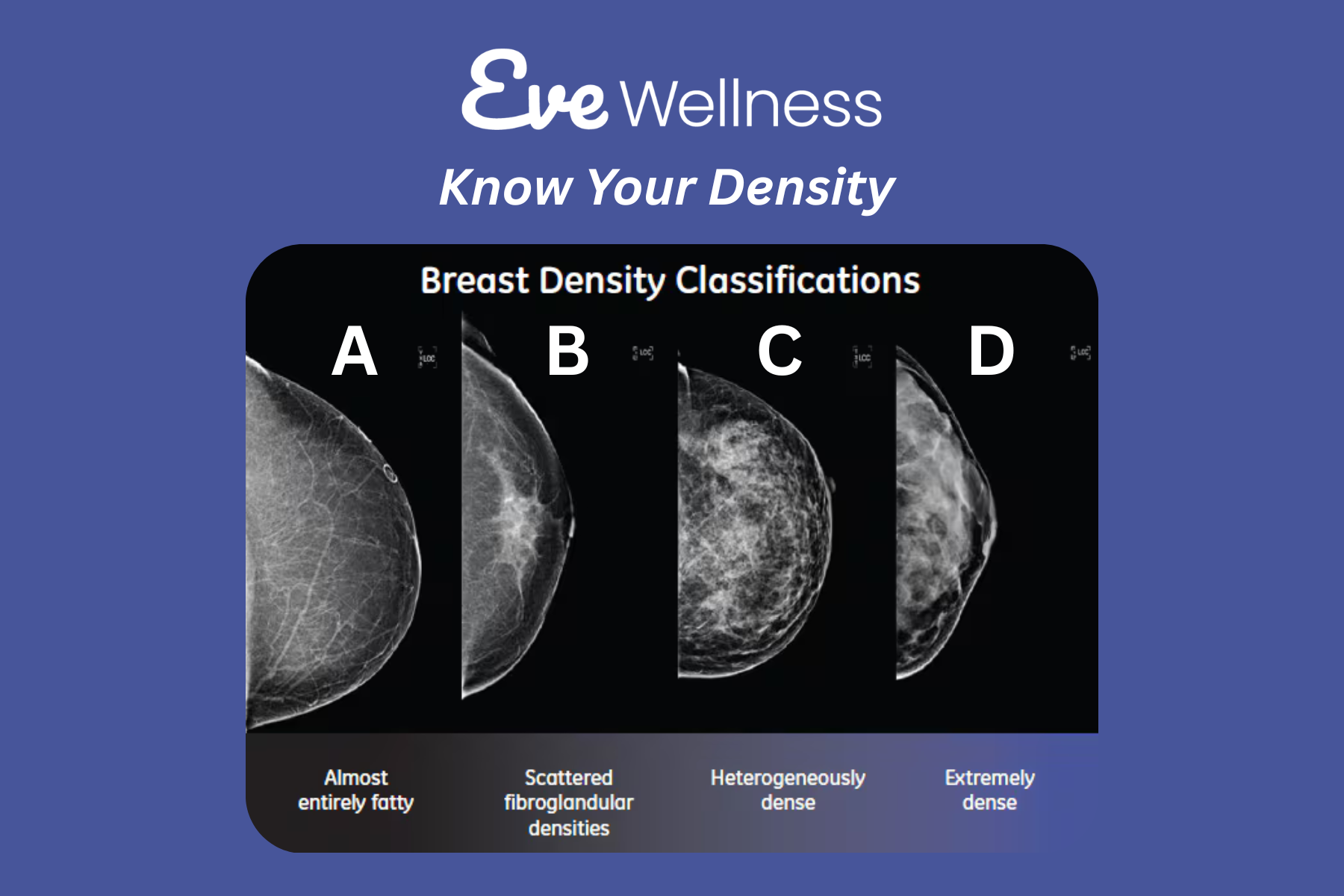
Dense tissue can make cancer harder to see on mammograms and is itself a breast cancer risk factor, according to the National Cancer Institute.
A density notification can begin a conversation about overall risk and whether additional imaging would be appropriate. Ultrasound supplements rather than replaces recommended mammograms, according to ACR/RSNA RadiologyInfo.
Turning awareness into action
Foley encouraged women to understand their reports and learn how their personal history may affect screening needs.
“Just knowing your risk can help you go back and do screening as well.”
Questions for a clinician can include:
- What is my personal risk?
- Does my mammogram show dense tissue?
- Would a formal risk assessment help?
- What screening plan makes sense for me?
He also encouraged paying attention during everyday activities.
“Look for anything that looks out of place,” he said.
Breast self-awareness means knowing how breasts normally look and feel and reporting changes promptly. It does not replace recommended screening, according to the American Cancer Society.
New lumps, swelling, skin dimpling, nipple changes or unusual discharge warrant medical evaluation at any age. These changes can have noncancerous causes but should still be checked, the CDC advises.
October’s campaigns may be winding down, but Foley’s goal for Eve continues: helping women feel informed and supported enough to take the next step in their breast health throughout the year.
For Foley, conversations with patients and cancer survivors have made the work personally meaningful.
“This has been the most rewarding thing I’ve ever done in my career,” he said.