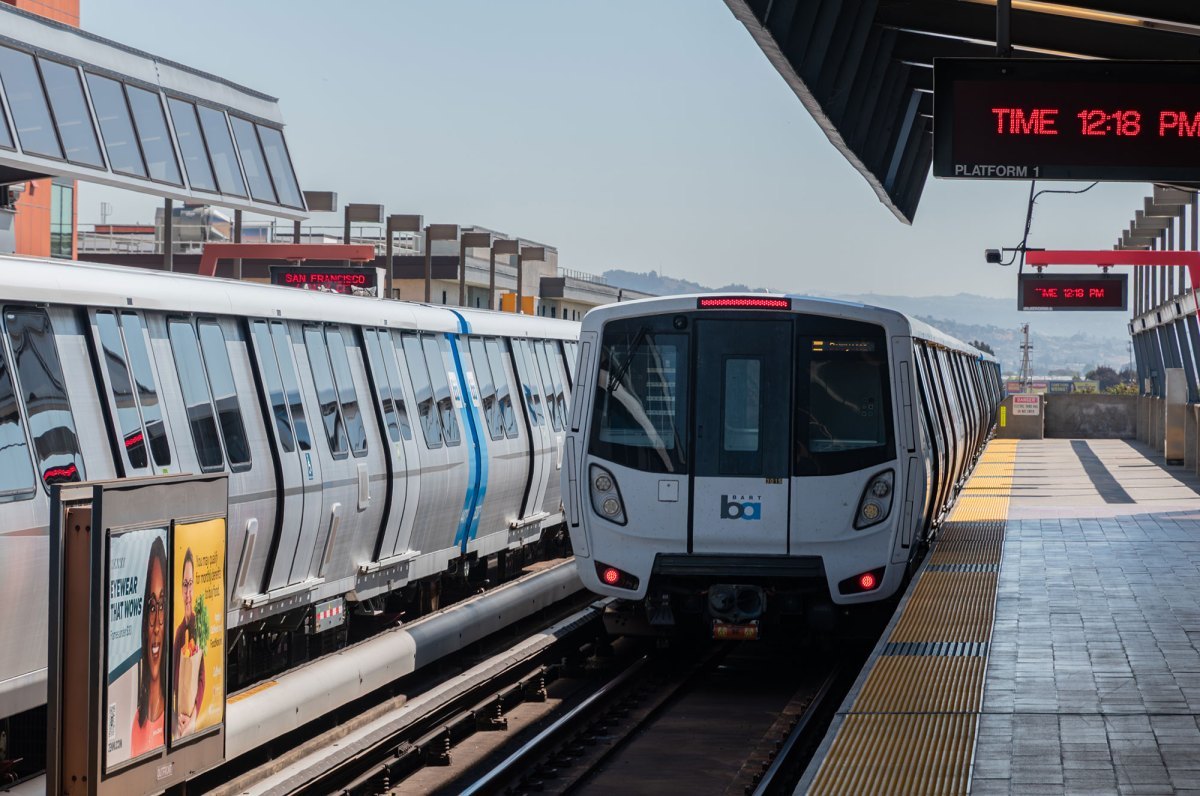
BART recorded its strongest ridership month since the pandemic in June 2026, a systemwide rebound that could bring more commuters through Walnut Creek's downtown station. But the agency faces a $375 million deficit that threatens deep service cuts without new voter-approved funding.
Systemwide, June ridership jumped 18.6% over June 2025, according to a BART press release dated Thursday, July 16. The full fiscal year ending in June tallied 59.5 million exits, 13% above the prior year. The single busiest post-pandemic day was June 9 when 236,785 riders passed through BART turnstiles. BART credited FIFA World Cup matches hosted in the Bay Area and San Francisco Pride weekend as the primary drivers, and noted it did not implement surge pricing for World Cup games.
Walnut Creek's downtown BART station sits within walking distance of Broadway Plaza and North Main Street restaurants, though station-specific ridership figures were not available.
County Connection, the bus system serving central Contra Costa County including Walnut Creek, carried nearly 240,000 riders in March 2026, its strongest March since 2019, with Saturday ridership 36% higher than the same month in 2019, according to County Connection data released in May.
A funding cliff despite the rebound
The gains come with a caveat. BART faces a $375 million structural operating deficit beginning in fiscal year 2027, according to a Contra Costa County Civil Grand Jury report approved Thursday, June 11. The agency's $1.15 billion FY2026 budget was balanced by drawing on the final installment of roughly $2 billion in one-time federal and state emergency aid. That money runs out after this fiscal year.
Before the pandemic, BART recorded 128.2 million annual passenger trips and covered 66.7% of operating costs through fares alone. By FY2025, the farebox recovery ratio had dropped to 25%, the Grand Jury report found.
November ballot measure is the lifeline
The Connect Bay Area ballot measure, authorized by Senate Bill 63, goes before voters in November 2026. It would raise sales taxes by a half-cent in Contra Costa, Alameda, San Mateo, and Santa Clara counties and by one cent in San Francisco. If approved, the measure would generate $1 billion annually for Bay Area transit, with BART receiving $310 million per year, according to The Inquirer on Thursday, May 7.
If the measure fails, BART has warned it could close up to 15 stations and reduce train frequency to every 30 to 60 minutes systemwide, according to the San Francisco Chronicle.
Amy Worth, former chair of the Metropolitan Transportation Commission and an Orinda resident, told the Chronicle in July that the campaign faces a steep climb. "It's always a challenge to meet those voter thresholds," Worth said. "You have to work hard for it."
A California State Auditor review found that five of six East Bay transit agencies audited, including County Connection, may exhaust their reserves within one to five years without new funding, according to a County Connection press release dated Friday, May 29.
Early polling shows 56% of voters in support of the Connect Bay Area measure, below the 60% cushion campaigns typically seek before facing organized opposition, according to the Chronicle.